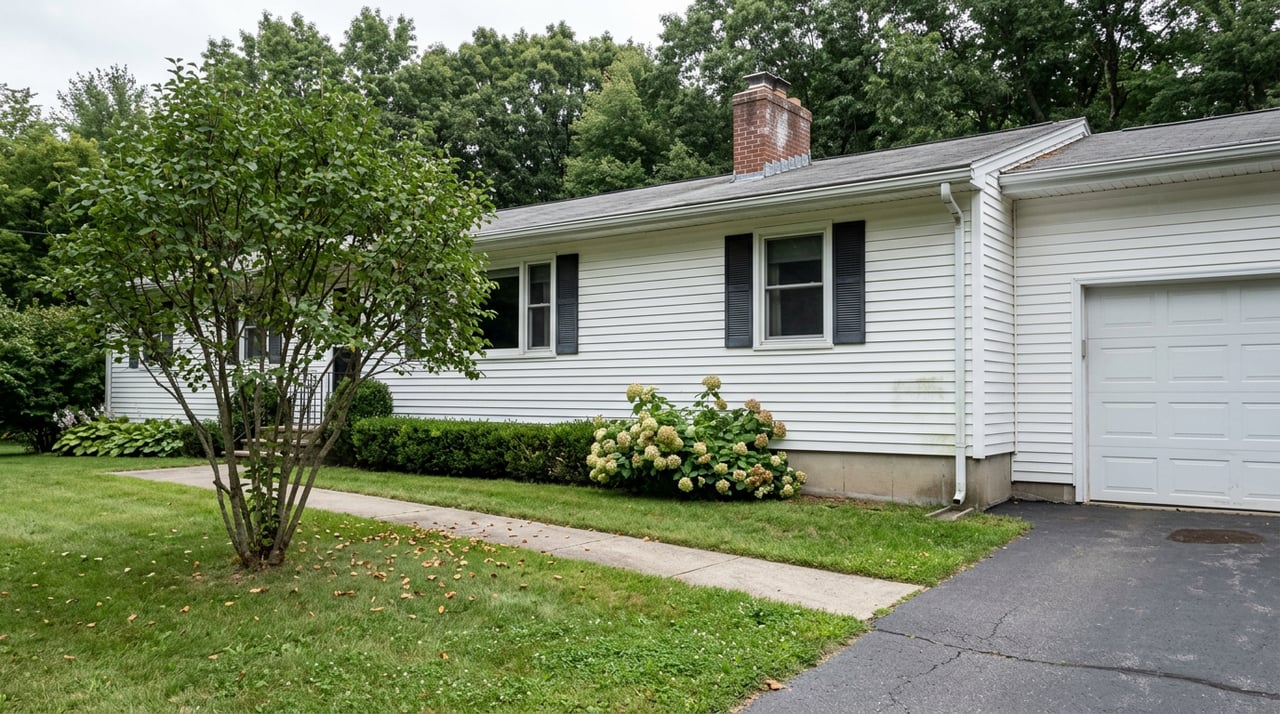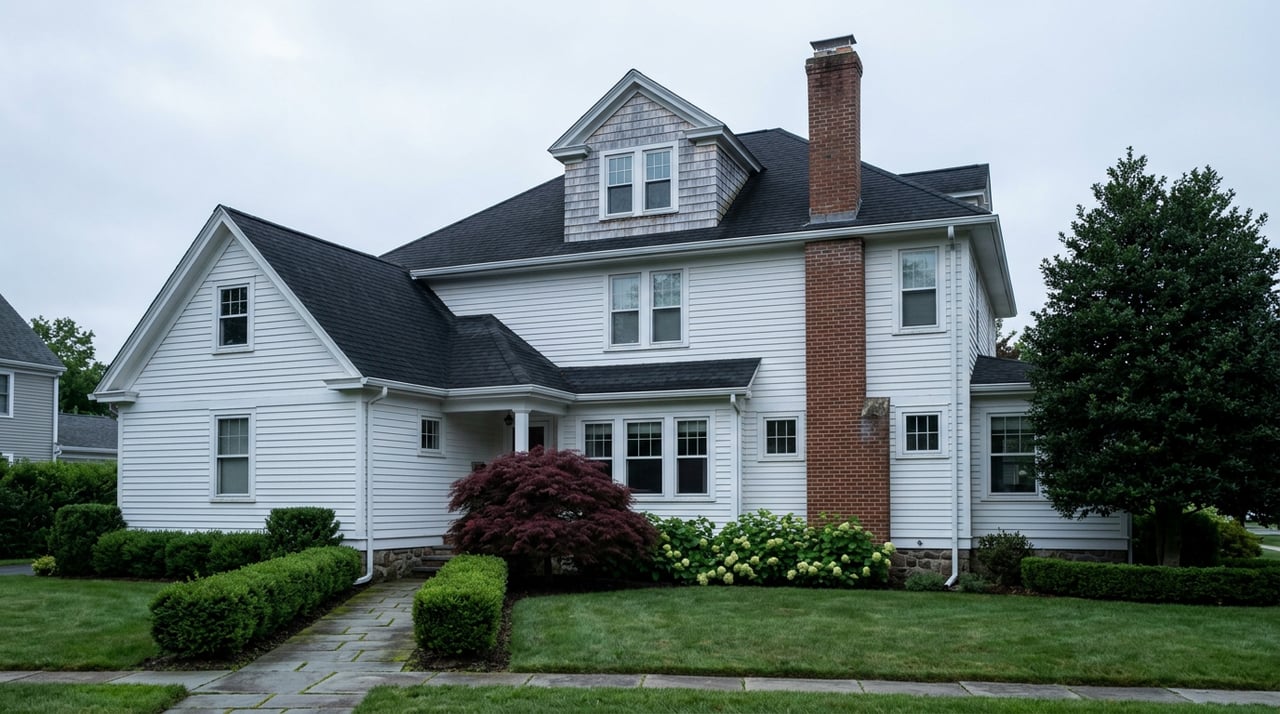
An inspector crouched at the foundation of a house near Williams Park in the Post Hill Historic District isn't looking at the roofline or the window trim first. He's looking for two small capped pipes sticking a few inches out of the lawn, six feet from the foundation wall. One is a fill pipe. One is a vent. If they're there, and the furnace inside runs on gas, something used to be buried in that yard, and nobody in the transaction yet knows what happened to it.
That scene plays out across New London more than most buyers expect, and it has almost nothing to do with how old the house is. The instinct is to assume the oldest homes carry the most risk: the 1678 Hempstead House anchoring its namesake historic district, or the whaling-era houses along Federal Street like the Acors Barns House and the Robert Coit House. Those houses are old enough to have survived wood heat, coal heat, and several conversions since. But age alone doesn't create the specific friction that shows up during inspection and financing. What creates it is a narrower, more recent window: whether the house was ever on oil heat, and whether the tank that fed it was ever documented as removed.
The city's age is a headline number, not the whole story
New London's housing really is old. In the city's most recent housing count, roughly 47 percent of homes were built before 1939, among the oldest housing stock of any city in the country, with another 28 percent dating to 1940 through 1969. That statistic shows up in a lot of generic "old house" content, and it's usually used to scare buyers about knob-and-tube wiring or plaster walls. Those things matter, but they're visible. An inspector sees cracked plaster. Nobody sees a tank that was decommissioned decades ago with no permit on file.
The city's own historic district inventory tells the more useful version of this story. The Hempstead Historic District grew up as a working-class urban neighborhood in the mid to late 1800s. The Montauk Avenue district was laid out as a streetcar suburb in the first half of the 1900s, full of Queen Anne and revival-style houses like the Tudor Revival at 58 Bellevue Place, designed by local architect Dudley St. Clair Donnelly. Post Hill grew out of 19th century whaling wealth around Williams Park. Hodges Square, added to the National Register in 2016, sits between downtown and the waterfront on some of the oldest developed land in the city. Every one of these districts spans decades of construction, which means every one of them also spans the era when Connecticut homes commonly ran on oil.
The window that actually matters
Homes across this region built from the 1920s through the 1970s frequently ran on oil-fired furnaces and boilers, with the tank buried in the yard to keep fuel off the basement floor. That's the real risk window, and it doesn't map cleanly onto any single historic district or any single decade of construction. A Montauk Avenue Queen Anne from the early 1900s and a mid-century infill colonial two blocks away could both have gone through an oil-to-gas conversion at some point in the last hundred years, and either one could have a tank still sitting in the ground with no paperwork to show what happened to it.
The clues an inspector looks for are consistent, whichever district the house sits in:
- A capped fill pipe and vent pipe standing a few inches to a couple of feet above the ground near the foundation
- Abandoned copper fuel lines in the basement running toward an exterior wall
- An old oil burner switch or disconnected gauge near a furnace that now runs on gas
- Patched openings in the foundation where a fill line used to pass through
- A shallow depression or soft spot in the yard where a tank may have settled
A standard home inspection is a visual, non-invasive look at the property. It can document these clues, but it can't confirm what's underground or whether it has leaked. That requires a separate step: a tank sweep using a metal detector or ground-penetrating equipment, followed by soil testing if the sweep finds something. The Connecticut Department of Energy and Environmental Protection recommends collecting a soil sample from beneath the tank and piping and having it analyzed for petroleum hydrocarbons at a certified lab, specifically because a tank can look clean on the outside and still have contaminated the soil around it.
What the state actually requires, and what it doesn't
Connecticut law requires sellers of one to four family homes to give buyers a written Residential Property Condition Report before signing a purchase agreement, and that report specifically asks whether there's an underground fuel tank, along with its location and age if known. If a seller genuinely doesn't know, the honest answer is to mark it unknown rather than guess. What the law does not do is require anyone to remove a tank that isn't leaking. There's no mandate forcing a nonleaking tank out of the ground, and no dedicated program that pays a homeowner to remove one voluntarily. The local fire marshal has to be notified before a tank comes out, and if a leak turns up during removal, that gets reported to the state Department of Energy and Environmental Protection, but the decision to remove a quiet, non-leaking tank in the first place is left entirely to the market.
That's the part most buyers get backwards. They assume state law is the obstacle. It isn't. The obstacle is downstream, at the lender and the insurer.
The real gatekeepers are financing and insurance, not statute
An underground tank doesn't automatically disqualify a home from a mortgage, but it does introduce uncertainty that lenders don't like, and some loan programs respond to that uncertainty with their own requirements. FHA and VA financing in particular may ask for proof that there's no contamination before approving the loan. Homeowners insurance carriers vary too. Some treat a buried tank as an underwriting question regardless of what the state requires, and coverage for an oil spill depends entirely on the specific policy, since not every insurer covers escaped fuel losses at all.
This is the actual mechanism worth understanding before you write an offer on an older New London house. The state disclosure law sets a floor: sellers have to tell you what they know. Everything above that floor, whether the deal can close on schedule and whether you can insure the house once you own it, gets decided by whoever is underwriting your loan and your policy. A documented, professionally closed tank with lab results in hand tends to satisfy both. An unresolved one, especially with signs of a leak, is what actually delays or kills financing.
What a sweep and cleanup cost, and why the number matters more than the age of the house
A tank sweep and soil test typically runs $300 to $600, a small cost relative to what's at stake. If the sweep finds a tank and the soil comes back clean, you've turned an unknown into a documented fact, which is usually enough for underwriting. If it comes back showing contamination, cleanup costs vary widely with the size of the spill, but remediation for a residential leak has been known to run from a few thousand dollars into the tens of thousands. That range is exactly why the timing of this conversation matters. Raise the tank question during your inspection contingency period, while you still have leverage to negotiate a resolution or walk away, not after your appraisal and financing deadlines have nearly passed.
What to actually do during your contingency window
- Ask directly, in writing, whether the seller knows of a current or former underground tank, and don't accept a verbal "not that I know of" in place of the disclosure form's actual answer.
- If the inspector flags any of the physical clues, schedule a tank sweep before your contingency period closes. Several firms serving New London County, including Sherwood Inspection Services and National Property Inspections of New London County, offer this alongside a standard home inspection.
- If a tank is found, get the soil tested for petroleum hydrocarbons at a certified lab, and keep the resulting letter report. Lenders and future buyers will both want to see it.
- If a tank was removed years ago with no paperwork, don't assume it's fine. Check the seller's records and, if nothing exists, weigh whether a soil test now is worth the cost relative to inheriting an undocumented question when you eventually sell.
A few questions worth asking directly
Does every old house in New London have a buried tank? No. Plenty of homes, including some of the oldest ones, were never on oil or converted early enough that documentation still exists. The risk isn't the house's birth year. It's whether it ever ran oil and whether that chapter was ever closed on paper.
Can I still get a mortgage if a tank shows up during inspection? Often, yes. A properly documented, non-leaking tank rarely stops financing on its own. An unresolved leak, or a total absence of records, is what tends to cause delays.
Who pays for the sweep and cleanup? That's a negotiation, not a rule. Buyers commonly request it as a contingency item, and sellers who suspect an old tank is on the property often order their own sweep before listing, so they aren't negotiating from a position of surprise.
An older New London house, whether it sits in Hempstead, Hodges Square, Montauk Avenue, Post Hill, or Pequot Colony, comes with real character and a real set of questions that don't announce themselves on a walkthrough. Working through them calmly, with the right people in the loop at the right point in your contract, is the difference between a documented line item and a closing delay.
If you're looking at a home in one of New London's older neighborhoods and want a second set of eyes on what a listing might be hiding, or what to ask before you write an offer, Brooke Buroughs is happy to talk through it with you. Let's Connect.